How to Use Active Recall in 10 Minutes
By Tekin Kıvrak, cloud infrastructure engineer

A few years ago, I was preparing for professional certification exams while working full-time. I had maybe 45 minutes a day to study, usually after a long workday, with a brain that wanted Netflix instead of practice questions.
Rereading my notes felt productive. It wasn't. I'd recognize everything and remember nothing. What got me through those exams (all of them, on the first attempt) was a 10-minute active recall loop I could run even on the worst days.
You don't need marathon study sessions to learn deeply. You need a small, repeatable system that turns reading into remembering. This is the exact loop I used.

Why retrieval beats rereading
Learning sticks when your brain pulls information out, not when you push more in. That pull is retrieval. Instead of rereading highlights until they feel familiar, you close the page and try to reconstruct the ideas from memory. It's uncomfortable for a moment, but that's the good kind of effort: you're strengthening the pathway you'll actually use on exams, in meetings, and on real projects.
A large review by Dunlosky and colleagues ranked learning strategies. Retrieval practice, testing yourself, consistently beat passive methods for long-term retention and transfer. If you want the full evidence, Improving Students' Learning With Effective Learning Techniques is a dependable reference. The short version: rereading raises familiarity and confidence while actual recall later stays weak. Retrieval lowers confidence short-term and raises retention long-term.
Cramming feels productive because time is visible. Real learning works differently. Shorter, distributed sessions beat long infrequent ones. Your advantage is consistency. A ten-minute rep you will actually do beats an hour you keep postponing.
The 10-minute daily loop
This is your core routine. Set a timer and move through it without negotiating.
Minutes 0-1: choose one target. Pick a subtopic (SQL joins, photosynthesis stages, CSS flex properties). Name it as a question: "What are the four stages of...?"
Minutes 1-6: retrieve with eyes away. Close the book or tab. On paper or in a plain note, write everything you can reconstruct: definitions, steps, examples. Speak out loud if you're alone. The goal is the attempt from memory, not perfection.
Minutes 6-8: check and correct. Open your source. Compare quickly. Circle the gaps. Add concise corrections in your own words. If a diagram helps, sketch it.
Minutes 8-9: make one question for tomorrow. Keep it atomic: "Explain the difference between INNER JOIN and LEFT JOIN with a 3-row example." One clear, testable prompt.
Minutes 9-10: log it and set a cue. Mark the rep in a tiny log. Note one friction ("I kept peeking," "question too big"). Set a calendar cue or deck reminder for tomorrow.
That's the loop. Ten minutes. On good days, you'll go longer. On tough days, the floor keeps your momentum alive. If starting is the hard part, anchor it to your first beverage. The moment the cup hits the desk, the timer starts.
No apps required if you prefer paper. Use a notebook with two columns: left for retrieval, right for checking and correcting. Write one question for tomorrow at the bottom of each page.
How to write better questions
Weak questions produce weak learning. Make each one atomic (about a single idea), answerable in 1-2 minutes, and verifiable against a source.
Five patterns worth stealing:
- Explain: "Explain gradient descent in one paragraph as if to a new hire."
- Compare: "Compare fixed vs. growth mindset with one example each."
- Apply: "Given this code snippet, predict the output and why."
- Diagram: "Sketch the Krebs cycle and annotate two key steps."
- Troubleshoot: "You see error X. What are three likely causes?"
Avoid questions that are too broad ("Everything about WWI"), copy-pasted from the book, or have no clear check source. One good atomic question beats five vague ones.
Reading has one job: create testable prompts. Try this pipeline whenever you study a chapter. Scan headings to form a rough map. Read one section only. Close it and retrieve for 2-3 minutes. Check and condense your misses in your own words. Write one atomic question per section. This prevents zombie highlighting and gives you tomorrow's questions today.
Pair with spacing
Active recall is the engine; spacing is the calendar that keeps it running. After you write a question today, schedule it to reappear tomorrow, then three days later, then one week, then two to four weeks. The simple 1-3-7-21 pattern is enough to feel the curve flatten.
You can do this manually in a calendar or use any flashcard tool. The mechanics matter less than the cadence. If you only have time for ten minutes, do the day's top question and one new prompt. Small, steady reps compound. For a deeper dive into how recall, spacing, and note-making fit together, see Learning How to Learn.
Examples for different roles
Students (biology): "Draw and label a neuron; annotate input, processing, output." / "Explain the difference between meiosis I and II in three sentences."
Developers (web): "Given flex: 1 0 auto, what happens to width in a row container?" / "Name three approaches to debouncing and show a small snippet."
Designers: "Explain contrast, alignment, repetition, proximity with a tiny mock." / "List three accessibility checks for buttons and show a better label."
Marketers: "Write an A/B test hypothesis with a metric and a stop rule." / "Map a simple top-of-funnel to newsletter to offer journey."
Managers: "Teach-back: one-on-ones vs. status meetings, what changes and why?" / "Describe a pre-mortem in four steps and one case where you'd use it."
Each is atomic and scorable. You'll either retrieve it or you won't. Either way, you learn.

Making it stick: corrections, tracking, and timing
The magic lives in your corrections. After you retrieve, don't just mark wrong, rewrite the right answer in your words. Add a tiny "because" clause: "It's LEFT JOIN because the unmatched rows on the left persist." If it reveals a gap, write a follow-up line: "Find an example with NULLs." This turns misses into a queue of micro-tasks.
For tracking, keep a simple grid: Date | Topic | Loop completed (yes/no) | Questions made | Hardest miss | Next cue (D1/D3/D7). In 15 seconds you'll see whether the practice happened and whether your prompts are getting clearer.
Most people learn best when attention is still fresh. Two reliable spots: early morning paired with your first beverage, or right after lunch with a short walk first. For more on creating protected focus windows, see Deep Work and Focus (Pomodoro).
Once a week, scan your distillations and pick one idea to teach back in a short paragraph to a friend or yourself. Teaching compresses thinking. Compression reveals gaps.
When you get stuck
Rereading instead of recalling? Give yourself a hard rule: retrieve first for 2-3 minutes before any reread. The timer is your boundary.
Question too big? Split it. "All of WWI" becomes "Three causes of WWI in one paragraph" and then "Two turning points with impacts."
Running out of time? Reduce scope to one subheading only. Or run the loop during a Pomodoro break instead of scrolling.
Can't think of questions? Use the Explain/Compare/Apply/Diagram/Troubleshoot patterns and fill in your topic.
Forgetting to do it? Make the cue physical. Place a notecard and pen on your keyboard each night. Your hands touch the card before the laptop wakes.
A few questions that come up often: Is 10 minutes really enough? For daily maintenance and momentum, yes. You can always chain loops when time allows. Do you need flashcard software? No. Paper works fine; if you love apps, pick one and stick with it. What about open-ended subjects like writing or design? Make questions applied: "Write a 50-word hook for X audience" or "Redesign this button to pass contrast."
Seven days to get started
Day 1: pick one subject, stage your tools (notebook or notes app, timer, pen), write five atomic questions you'll cycle through this week.
Day 2: do the loop on question one. Log it. Write one new question from today's misses.
Day 3: recall question one again (D1), then question two (new). Mark D3 and D1 next to them for tomorrow.
Day 4: run question one (D3) and question two (D1). Make one new question.
Day 5: if life is messy, do one loop and stop. Protect the streak. The floor matters.
Day 6: skim your hardest miss from the week. Write a single "explain like I'm five" paragraph.
Day 7: scan your grid. How many loops completed? Which questions felt fuzzy? Fix one friction for next week: earlier time, clearer prompts, or a printed cue card.
Run this once. Expect noticeable recall gains by week two. A calmer exam or project week usually follows within a month. Design beats discipline. When the steps are small and clear, you won't need willpower to show up.
Was this article helpful?
Related Posts
Mindset · 8 min
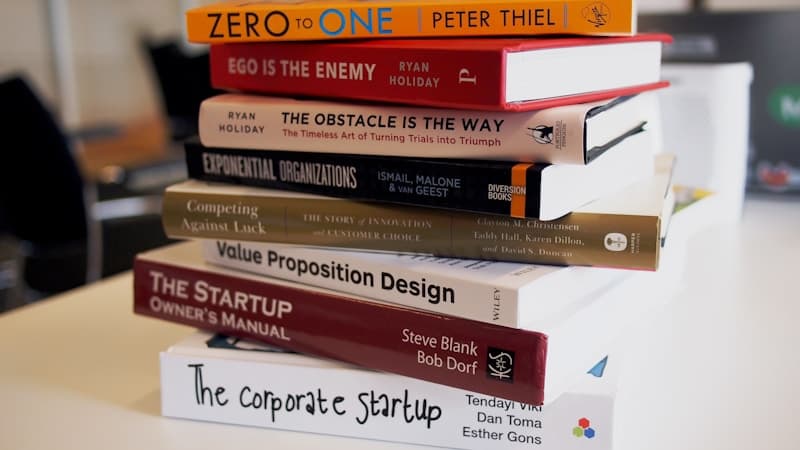
7 Books That Permanently Changed How I Think and Work
Not a reading list. These are the 7 books that rewired how I approach decisions, habits, focus, and learning. Each one left a permanent mark.
Mindset · 7 min
How to Develop a Growth Mindset in Practice
Learn how to build a growth mindset that turns setbacks into stepping stones. Practical exercises to catch fixed thinking and take action today.
Mindset · 8 min
Learning How to Learn: Master Any Skill Faster
Master the meta-skill of learning. Active recall, spaced repetition, and deliberate practice techniques to acquire any skill in half the time.

AI & Tech · 8 min
When Not to Use AI: 5 Tasks I Now Do Manually on Purpose
AI can do almost everything for you. That's exactly the problem. Five tasks I now keep manual; not out of nostalgia, but because outsourcing them costs more than it saves.
Explore more topics: