7 Books That Permanently Changed How I Think and Work
By Tekin Kıvrak, cloud infrastructure engineer
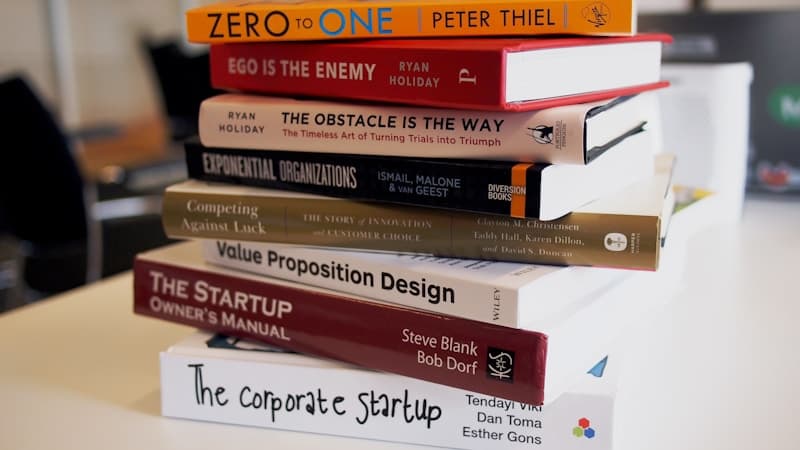
I read about 30 books a year. Most are good. Some are great. A handful actually change how I operate.
This isn't a "best books of 2026" list. These are the books that permanently altered my behavior: books I read months or years ago that still influence decisions I make today. The test is simple. If I can point to a specific habit or thinking pattern that exists because of a book, it makes this list.
Seven books. Each one changed something concrete about how I think or work.

1. Deep Work by Cal Newport
This one restructured my entire workday. Before reading it, I thought productivity meant doing more things faster. Newport's argument flipped that: productivity is about doing fewer things with deeper focus. The ability to concentrate without distraction is becoming rare and therefore increasingly valuable.
After reading it, I restructured my schedule around protected focus blocks. No meetings before noon. Phone in another room during writing sessions. Email checked twice a day, not 50 times.
The concept that stuck hardest: "attention residue." When you switch tasks, part of your brain is still processing the previous one. Every context switch costs you 15 to 25 minutes of full focus. Once you see this, you can't unsee it.
Read this if you feel busy but unproductive, or if your work requires thinking rather than just executing.
2. Atomic Habits by James Clear
I'd read habit books before. Most said "be disciplined" in 200 pages. Clear's contribution is the systems framework: don't focus on goals, focus on the system of small behaviors that leads to the goal. Goals are about results. Systems are about processes.
Three ideas I use daily:
- Habit stacking: "After I pour my coffee, I will open my notebook and write today's focus task." Linking new habits to existing ones makes them automatic. This directly shaped my morning routine.
- Environment design: put your running shoes by the door, remove social media apps from your home screen. Make good habits easy and bad habits hard.
- Identity-based habits: instead of "I want to run a marathon," think "I'm the type of person who runs." The shift from outcome to identity is subtle but powerful.
This book is why I think in systems instead of goals. Two years later, the framework still governs how I approach any behavior change.
Read this if you've tried to build habits and failed, or if you rely too much on willpower.
3. Thinking, Fast and Slow by Daniel Kahneman
Kahneman's core idea, that we have two thinking systems (one fast and intuitive, one slow and deliberate), sounds simple. But the implications are enormous. Your fast brain is wrong more often than you think, and in predictable ways.
After reading this, I started my decision journal. Not because I'm naturally reflective, but because Kahneman showed me how many cognitive biases I'm subject to: anchoring, loss aversion, confirmation bias, the planning fallacy.
The most useful concept: the "premortem." Before starting a project, imagine it has failed. Now work backward. What went wrong? This exercise surfaces risks your optimistic brain conveniently ignores.
Warning: this book is dense. It took me three months to finish. But the ideas have influenced my thinking every single day since.
Read this if you make important decisions (career, business, financial) and want to make them better.
4. Make It Stick by Peter Brown, Henry Roediger, and Mark McDaniel
Most people learn wrong. Re-reading notes, highlighting textbooks, watching tutorials on repeat: these feel productive but barely work. Make It Stick presents the research on what actually works: retrieval practice, spaced repetition, interleaving, and desirable difficulties.
This book is why I use active recall instead of passive review. When I'm learning a new programming language or framework, I close the documentation and try to write code from memory. Then I check. The struggle of trying to remember is what creates durable learning.
The counterintuitive finding: learning should feel hard. If studying feels easy, you're probably not learning much. The techniques that feel most productive (re-reading, highlighting) are the least effective. The ones that feel frustrating (self-testing, spacing) work best.
I've recommended this book to more people than any other on this list. It's the operating manual for learning how to learn that nobody gave us in school. Read this if you're a student, self-learner, or anyone who needs to acquire new skills regularly.
5. Essentialism by Greg McKeown
McKeown's thesis: almost everything is noise. Only a few things really matter. And if you don't prioritize your life, someone else will.
I read this during a period where I was saying yes to everything: projects, meetings, coffee chats, side hustles. I was busy and miserable. Essentialism gave me a framework for ruthless prioritization.
The question I now ask before every commitment: "Is this a clear YES? If not, it's a NO." Not maybe. Not "I should." Either it's obviously worth my time, or it's not. This filter alone eliminated roughly 40% of my commitments.
The book also killed my multitasking delusion. McKeown points out that the word "priority" was singular for 500 years. You can't have five priorities. You have one priority and four distractions. This directly influenced how I approach my morning focus block.
Read this if you feel overcommitted, can't say no, or everything feels equally urgent.
6. Why We Sleep by Matthew Walker
I used to treat sleep as negotiable. "I'll sleep when I'm dead." "Five hours is enough if I drink enough coffee." Walker demolished every excuse with terrifying data.
Sleeping less than seven hours regularly is linked to increased risk of cancer, Alzheimer's, heart disease, and obesity. After 16 hours awake, your cognitive performance matches someone legally drunk. You cannot catch up on sleep; lost deep sleep is gone. And caffeine doesn't give you energy: it blocks the chemical (adenosine) that tells you you're tired. The tiredness is still there, waiting.
This book is why I now track my sleep with an Oura Ring and treat my 10:30 PM bedtime as non-negotiable. Not because I'm disciplined, but because Walker scared the hell out of me. It's also why I wrote about energy management. Sleep isn't a productivity hack. It's the foundation everything else is built on.
Read this if you sleep less than seven hours, rely on caffeine, or think sleep is a waste of time.
7. The Mom Test by Rob Fitzpatrick
This is technically a startup book about customer interviews. But its core lesson applies everywhere: people lie to you (kindly), and you need to ask better questions to get truth.
The "Mom Test" principle: if you ask your mom "is my business idea good?" she'll say yes because she loves you. Instead, ask about her behavior: "When did you last have this problem?" "What did you do about it?" "How much did you spend trying to solve it?"
I now apply this to all conversations where I need honest feedback:
- Instead of "do you like my article?" ask "what did you do after reading it?"
- Instead of "would you use this feature?" ask "how do you currently handle this?"
- Instead of "is this a good idea?" ask "have you tried solving this before? What happened?"
It's the shortest book on this list (under 200 pages) and the highest insight-per-page ratio of anything I've read. Read this if you build products, create content, or need honest feedback from anyone.
How I Read
A few notes on my reading process, since people always ask. I read one book at a time: no parallel reading, finish one before starting the next. I take notes using a physical notebook rather than the Kindle highlighter, because writing by hand forces me to process the idea rather than just mark it. After finishing, I write a one-page summary in Notion. If I can't summarize it, I didn't understand it. I revisit these summaries every January, and some books get a full re-read; Deep Work and Atomic Habits go through that cycle every year.
Reading 30 books a year means nothing if you don't retain and apply what you read. Reading less but thinking more about what you read is the real edge.
If you're reading one book from this list, start with Atomic Habits. It's the most immediately actionable. If you're reading two, add Deep Work. Together they give you a system for building good habits and a framework for protecting focused time. That combination covers 80% of personal productivity. Everything else on this list builds from there.
Was this article helpful?
Related Posts
Mindset · 7 min
How to Develop a Growth Mindset in Practice
Learn how to build a growth mindset that turns setbacks into stepping stones. Practical exercises to catch fixed thinking and take action today.
Mindset · 8 min
Learning How to Learn: Master Any Skill Faster
Master the meta-skill of learning. Active recall, spaced repetition, and deliberate practice techniques to acquire any skill in half the time.

AI & Tech · 8 min
When Not to Use AI: 5 Tasks I Now Do Manually on Purpose
AI can do almost everything for you. That's exactly the problem. Five tasks I now keep manual; not out of nostalgia, but because outsourcing them costs more than it saves.
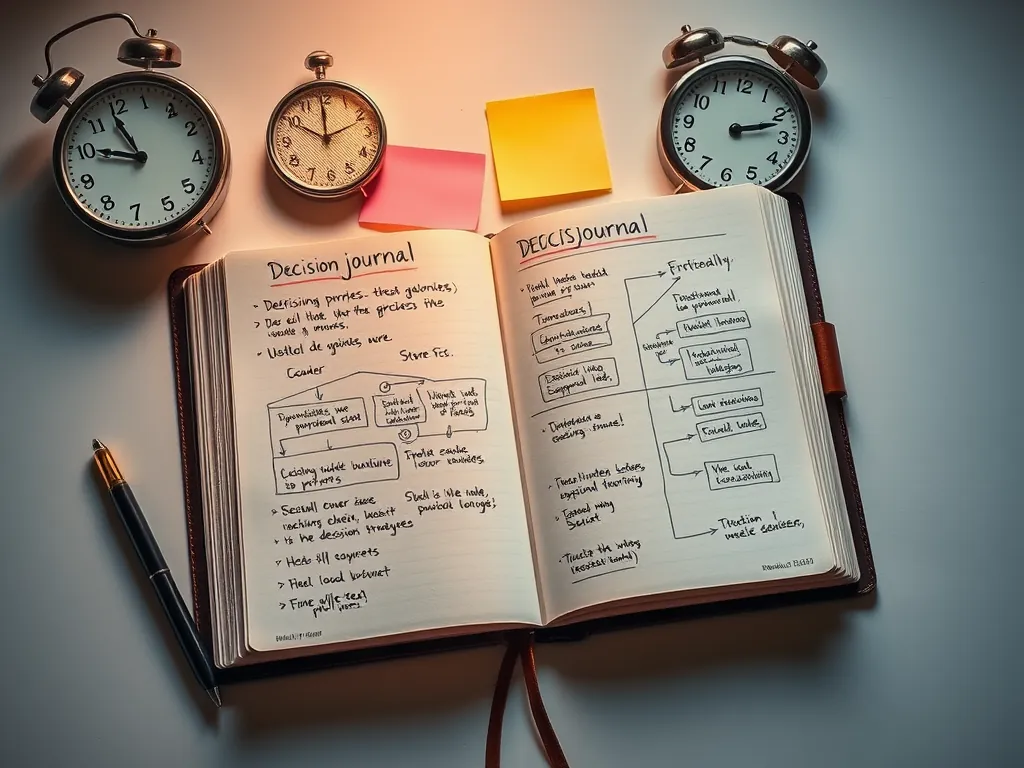
Mindset · 7 min
The Decision Journal: Improve Your Decision-Making
Make better decisions by keeping a decision journal. Track choices, learn from outcomes, and develop elite-level judgment over time with this simple system.
Explore more topics: