How to Turn Goals into Systems
By Tekin Kıvrak, cloud infrastructure engineer

I used to set ambitious goals every January: learn a new language, get fit, write a book. By March they'd be forgotten. The problem wasn't my ambition. It was that I had no daily engine to move me forward. Everything changed when I stopped chasing outcomes and started building systems, repeatable inputs I could control every single day.
Big goals sound inspiring. Without a daily engine, they stall. This post shows you how to design a weekly system, choose the right inputs, set floors and ceilings, and review in minutes rather than hours. By the end you'll have a small, repeatable setup that compounds.

Why systems outlast goals
A goal is an outcome: publish an article, pass an exam, run a 5K. A system is a process you run today: write 200 words, practice for 20 minutes, review a flashcard deck. Outcomes motivate, but processes produce. You need both: keep the destination, build the road.
The other piece that makes systems work is feedback speed. Good systems generate quick signals, checkmarks, minutes, reps, so you can adjust before momentum dies. When you commit to running the process, you stop negotiating with yourself every morning. You wake up and run the play. Then the play runs you.
From outcome to daily inputs
The core move: translate each outcome into one to three daily or weekly inputs with clear thresholds. Here's how to do it in under 30 minutes.
- Write the outcome in one sentence, present tense. "I publish two useful articles each month."
- Name your validating outputs: the metrics you check monthly. "2 published posts; 1 newsletter issue." These are lagging indicators, they confirm what already happened, so don't stare at them daily.
- List candidate inputs: tasks you control that plausibly produce the outcome. Idea capture, outlining, first drafts, editing blocks. Brainstorm freely, then cut.
- Select your Big 3 inputs, the one to three that move the needle most. Example: one 25-minute draft block before 10am four days a week; 30 minutes of edit review twice a week; one outline on Friday.
- Add thresholds. Every input needs a floor (what you do on a bad day) and a ceiling (so you don't overconsume one area). Draft block: floor 25 minutes, ceiling 2 blocks per day.
- Anchor inputs to time and place. Morning for creation, afternoon for admin, evening for learning. Block these as repeating calendar events.
- Remove friction in advance. Stage files and templates the night before. Put the first tab you need in your bookmarks bar and hide everything else.
- Decide how you'll track. A simple weekly scorecard is enough. More on that next.
The goal of this process isn't a perfect plan. It's a working one.
The weekly scorecard
Keep it scannable. You should see the whole week in 15 seconds.
Columns: Day | Input 1 (yes/no) | Input 2 (minutes or reps) | Input 3 (yes/no) | Notes (one line)
A sample week:
- Mon: yes | - | - | Early call; block done 9:10.
- Tue: yes | 32m | - | Good edits; next: figures.
- Wed: yes | - | - | Draft intro paragraphs.
- Thu: yes | 28m | - | Tightened body; removed fluff.
- Fri: - | - | yes | Outline ready; images TBD.
- Sat: - | - | - | Rest.
- Sun: - | - | - | Plan next week.
Reading this takes 15 seconds. You know whether the system ran, regardless of mood.
Identity matters here too. Pick inputs that express the person you're becoming: "I'm the kind of person who ships one meaningful block before lunch." Identity-aligned actions are easier to repeat than ones that feel like obligations.
Floors, ceilings, and environment
Floors keep you moving on bad days. Ceilings protect you on good ones.
Some examples: Writing floor is one 25-minute block before 10am; ceiling is two blocks before lunch. Exercise floor is a 10-minute walk; ceiling is 45 minutes on weekdays. Learning floor is a 10-minute recall loop; ceiling is 45 minutes if you're also shipping something that day.
Environment shapes behavior just as much as intention. Open the exact document you'll start, then close unrelated apps. Headphones on the desk, sticky note with the first task, water bottle filled. Use Do Not Disturb during your first block; put high-temptation apps behind an extra screen.
This is attention design, not heroics. Small tweaks shift behavior more reliably than pep talks. For more on protecting your focus blocks, see Deep Work and Focus (Pomodoro).
What it looks like in practice
Four patterns, each following the same structure:
Creator (publish consistently): 4 morning draft blocks + 2 edit sessions per week + 1 Friday outline. A desktop workspace with only one window visible. Sunday look-back on the scorecard.
Learner (pass a certification): 5 x 10-minute recall loops + 2 x 45-minute problem sets per week. Printed formula sheet; timer visible. Weekly practice quiz with one page of corrections.
Health (improve fitness): 3 strength sessions + 2 post-meal walks per week + protein-forward lunch on workdays. Bag packed the night before; route mapped.
Professional (ship features): 1 early focus block for deep work, 1 afternoon block for code review, 1 spec review on Friday. Notifications off during all three.
To get started without overthinking: Day 1, define your outcome and pick 1-3 inputs with thresholds. Day 2, block the time and stage your tools. Day 3, run the inputs and mark the scorecard. Day 4, remove one friction point you noticed. Day 5, adjust dose if something felt too big or too easy. Day 6, try chaining two blocks. Day 7, read the scorecard in 60 seconds and change one thing. Repeat. The shift usually shows up within two weeks.

When things go wrong
Hitting inputs but not seeing results? Stay the course for two full cycles before changing anything. External results always lag. Then increase dose slightly or improve quality within the block. For background on why lead measures matter more than lag measures, the 4 Disciplines of Execution is worth a look.
Tracking too many things? Collapse to a Big 3. Track the rest opportunistically, if at all.
Losing steam mid-afternoon? A 15-minute reset helps: light, water, a short walk, then one sprint. See how to handle the afternoon slump.
Changing goals too often? Freeze the outcome for one month. Adjust only inputs and environment. A decision journal can help you capture your reasoning and stop the second-guessing loop.
A few practical questions people ask: How many inputs should you run at once? One to three. More than that blurs focus. How long should early blocks be? Start with 25 minutes. Add a second only if time and energy allow. What if your week falls apart? Hit your floors. Never miss two days in a row. Systems survive because they scale down, not because they're perfect.
Was this article helpful?
Related Posts

AI & Tech · 8 min
When Not to Use AI: 5 Tasks I Now Do Manually on Purpose
AI can do almost everything for you. That's exactly the problem. Five tasks I now keep manual; not out of nostalgia, but because outsourcing them costs more than it saves.
Mindset · 8 min
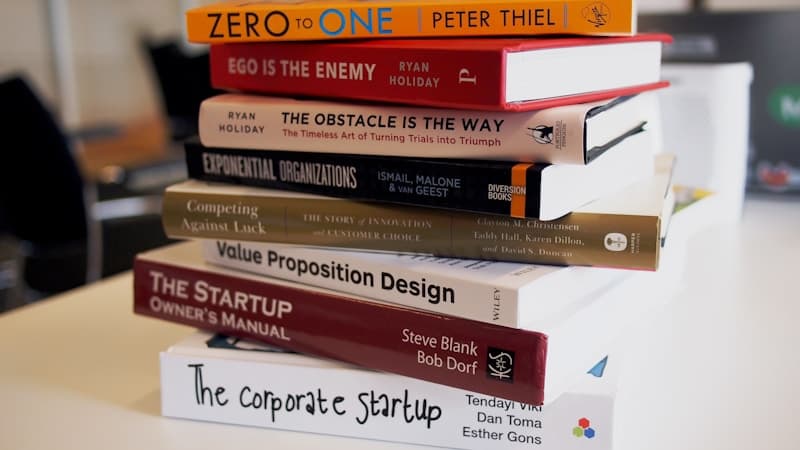
7 Books That Permanently Changed How I Think and Work
Not a reading list. These are the 7 books that rewired how I approach decisions, habits, focus, and learning. Each one left a permanent mark.
Mindset · 7 min
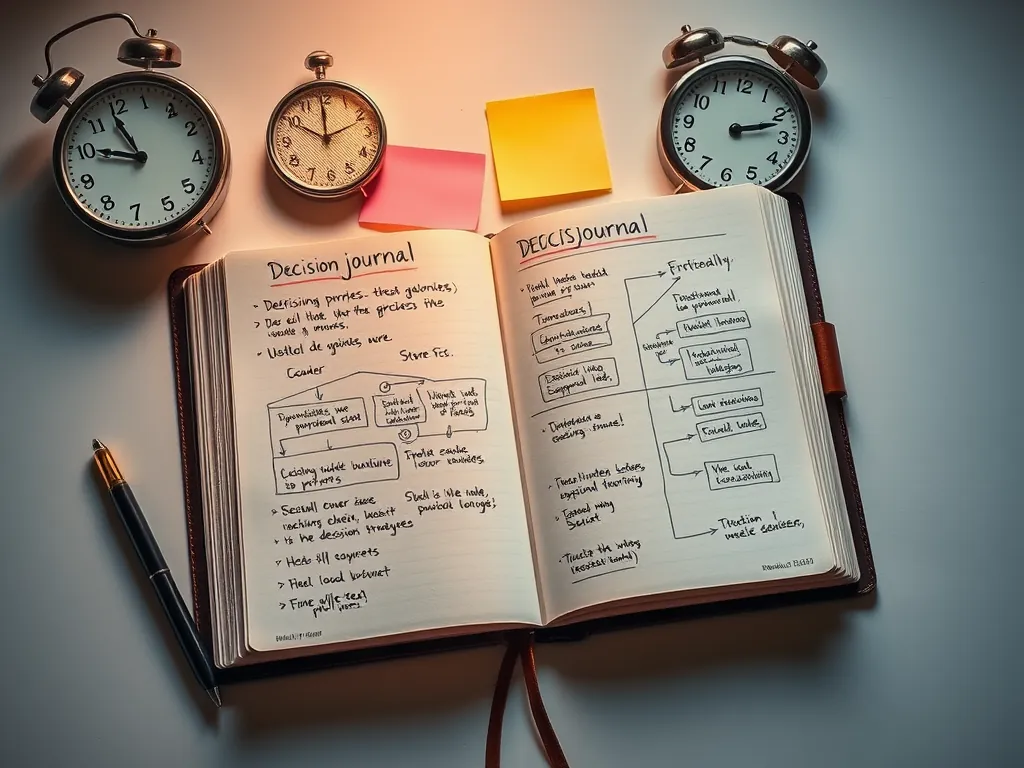
The Decision Journal: Improve Your Decision-Making
Make better decisions by keeping a decision journal. Track choices, learn from outcomes, and develop elite-level judgment over time with this simple system.

Mindset · 8 min
How to Build Keystone Habits That Transform Your Day
Keystone habits are small actions that trigger positive chain reactions. How to pick the right one and stack it onto your existing routine.
Explore more topics: