How to Develop a Growth Mindset in Practice
By Tekin Kıvrak, cloud infrastructure engineer

Last year, I bombed a presentation.
Not "it was okay" bombed. Full-on forgot my points, stumbled through slides, watched my audience check their phones. Walking out, a familiar voice in my head said: "You're just not good at this."
That voice used to stop me cold. I'd avoid the next opportunity, tell myself public speaking "wasn't my thing," and stay safe.
But this time, I caught myself. I asked a different question: "What if I'm just not good at this... yet?"
That single word, yet, changed everything. It's the gateway to growth mindset in practice.

What a growth mindset actually is
Psychologist Carol Dweck introduced "growth mindset" to describe the belief that skills can be developed through effort, strategy, and feedback. But here's what most people miss: belief alone isn't enough.
Practice is the skill of noticing a fixed thought quickly ("I'm bad at this"), naming what's actually true ("I'm new at this; my strategy isn't working yet"), and nudging yourself into a next small action (one rep, one line, one attempt). That loop anchors a growth-oriented identity. You learn to treat mistakes as data, not verdicts.
For a concise overview of what a real growth mindset is (and isn't), see Carol Dweck's piece in Harvard Business Review. It clarifies common misuses and shows how culture shapes mindset at work.
Two ideas support this work. First, neuroplasticity: your brain rewires with practice. New connections strengthen when you use them repeatedly. This is the biological basis for "yet." Second, how you explain a setback changes your next move. If failure means "I'm not talented," you stop. If failure means "my approach didn't fit yet," you try another strategy. Your brain is plastic, your explanations drive effort, and effort applied thoughtfully changes your capacity. This connects directly to learning how to learn, the meta-skill that makes all other skills possible.
Fixed vs. growth: everyday reframes
You don't need new personality traits. You need better sentences. A few quick flips to keep handy:
"If it's not perfect, it's worthless" becomes "Finished and improved beats never finished." "I failed, so I'm not good" becomes "This shows me what to adjust next." "Working hard means I lack talent" becomes "Effort builds talent and resilience." "This is too hard" becomes "This is where growth happens." "I'm not a writer/coder/leader" becomes "I'm learning to write/code/lead, one rep today."
Print these on a card and keep it near your desk. Rehearsal makes the flip faster.
Five levers to build it
Language is the first lever. Words act as permission slips. Add "yet" to the end of limitations: "I don't know this yet." "I can't solve it yet." "My draft isn't good yet, but I can improve it in 20 minutes." It's a small shift that keeps the door open.
Environment is the second. Lower friction for the action you want, raise it for the one you don't. Put a notebook and pen on your keyboard before bed. Move the phone charger outside the bedroom. Keep a "first five minutes" checklist taped to your monitor.
Usable feedback is the third. Ask for specifics: "What's one change that would 10x this?" Then implement just one fix immediately. That turns feedback from a verdict into a map.
Process goals over outcome goals is the fourth. "Write for 15 minutes" beats "publish a perfect post." Your brain can control process; it can't guarantee outcomes. This is why systems beat goals every time.
Identity-first is the fifth. Start with who you're becoming: "I'm the kind of person who shows up." When identity leads, performance follows.
Applying it to work and daily life
Knowledge work has two traps: invisible progress and constant comparison. This helps: define a small win for today (one slide, one bug fix, one paragraph), time-box it in 25-40 minute focus blocks with breaks, then review in 60 seconds (what moved, what got stuck, what's tomorrow's first step). When feedback arrives, take a breath and ask: what's the next controllable change? Repeat that loop and your confidence becomes earned, not imagined. For deep focus tactics, see my guide on deep work and the Pomodoro technique.
The mindset is portable. Fitness: aim for never zero; miss a workout, do five minutes today. Sleep: treat bedtime like a flight departure, same time every night. Learning: pair a new skill with a stable cue, like 10 minutes of practice after lunch. Relationships: replace mind-reading with curiosity and ask "Can you tell me more?"
A 30-day plan
The plan is light by design. Consistency beats intensity.
Week 1, notice and name: pick one area (writing, coding, fitness, a language), write your fixed-to-growth reframes on a sticky note, set a daily two-minute version of the skill, end each day with the question "What did I learn?"
Week 2, nudge the next action: keep the two-minute baseline, practice one deliberate improvement per day, ask for one line of feedback from someone and apply one suggestion immediately.
Week 3, stacks and systems: after your two-minute task, spend one extra minute improving something small; create a friction checklist (tools ready, apps blocked, "start with five minutes" card visible); review on Friday to identify which nudge helped most.
Week 4, stretch and share: pick a stretch goal (add five more minutes, or share a demo with a friend), teach one insight to someone else (teaching cements learning), then plan month two with one tiny upgrade.
By day 30, you'll have evidence that you can improve fast with short, steady practice. That's growth mindset in practice: not a slogan, a system.
Hard moments and what to say
When you feel behind: "I'm comparing my practice to someone else's highlight reel. I'll ship one imperfect draft today."
When fear shows up: "Fear means I'm at an edge. I'll do a five-minute version to get moving."
When you miss a day: "Never twice. I'll do the two-minute version right now."
When feedback stings: "It stings because I care. What's the one change I can make in the next 15 minutes?"
Procrastination often comes from a fixed mindset: "If I try and fail, it confirms I'm not good enough." The growth reframe is that avoidance is a stress signal, not a character flaw. Shrink the task to two minutes and start. Then ask, "Want five more?" For a full toolbox of tactics, see How to Beat Procrastination.
Common mistakes
Toxic positivity: acknowledging reality and then picking one small action creates more momentum than pretending everything is fine.
All-or-nothing thinking: a five-minute session counts. Never zero.
Doing too much at once: one area for a month. After it sticks, add a second.
Vague feedback: ask for a single, specific change that would most improve the work.
Treating mindset as a trait rather than a skill: skills improve with reps.
Common questions: Is this just positive thinking? No. It's strategic learning: see the gap, try a change, review the result. Does it actually work? Yes, when paired with specific practice and feedback. It's not magic; it's method. How long until it feels natural? Give it 30 days of small reps, then keep the cue and scale slowly.
Start today
Keep a reframe card visible: "I don't know this yet." "Mistakes are feedback." "Five minutes counts." "One fix now."
Track it simply: date, tiny version done (yes/no), one-line insight.
Here's your challenge: pick one thing you've been telling yourself you're "not good at," add the word "yet" to that sentence, and do the two-minute version today.
That's it. Design the first five minutes, guard your cue, and let improvement compound. In a month, you'll be surprised by how far "tiny" can take you.
Was this article helpful?
Related Posts
Mindset · 8 min
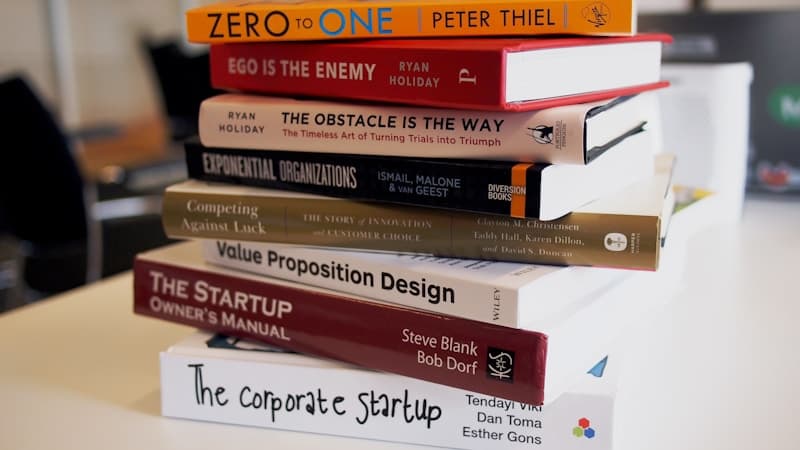
7 Books That Permanently Changed How I Think and Work
Not a reading list. These are the 7 books that rewired how I approach decisions, habits, focus, and learning. Each one left a permanent mark.

Mindset · 8 min
Learning How to Learn: Master Any Skill Faster
Master the meta-skill of learning. Active recall, spaced repetition, and deliberate practice techniques to acquire any skill in half the time.

Mindset · 8 min
How to Build Keystone Habits That Transform Your Day
Keystone habits are small actions that trigger positive chain reactions. How to pick the right one and stack it onto your existing routine.

Mindset · 8 min
How to Create a Personal Development Plan That Sticks
A one-page personal development plan built on four principles: clarity, friction, feedback, cadence. With the exact template my friend used for 18 months.
Explore more topics: