How to Build Keystone Habits That Transform Your Day
By Tekin Kıvrak, cloud infrastructure engineer

Two years ago, I realized I was living in reaction mode.
Every morning felt like a fresh scramble. Check email, respond to Slack, attend meetings, react to whatever came up. By evening, I'd worked hard all day but couldn't point to anything meaningful I'd accomplished.
Then I started paying attention to keystone habits: small behaviors that trigger positive chain reactions across your entire day. One good choice in the morning makes the next good choice easier. And the next. Like dominoes falling in the right direction.
Now my days feel different. Not because I work more, but because I do fewer things that move more things.

What a keystone habit actually is
A keystone habit is a behavior that, once in place, pulls other good behaviors along with it. It changes the conditions that make success easier elsewhere. Three patterns explain the pull.
Cascading benefits: a morning walk improves light exposure, which improves sleep timing, which improves focus. State change: a short early focus block flips you into builder mode for the rest of the morning. Coordination effects: planning tomorrow today reduces decision fatigue, making healthy eating and timely workouts more likely.
The difference between a keystone habit and a regular habit is scope. A regular habit improves one area. A keystone habit ripples across several. That's what makes them worth finding and protecting.
Why do they stick? Because they tend to align with how you see yourself ("I'm the kind of person who ships one block before lunch"), they change the physical context around you quietly, and they give you visible feedback the same day they happen. For more on the mechanics of behavior change, see How to Master Habit Formation.
How to pick the right keystone
Choosing the right keystone matters more than executing it perfectly. Here are five things to look for.
Identity fit: tie the habit to the person you're becoming. "I'm the kind of person who starts one focused block before 10:00" is stronger than "I should try to study more." The first is an identity statement; the second is an obligation.
Feedback speed: prefer behaviors with same-day feedback. Morning sunlight plus a short walk shifts mood and alertness within 20-30 minutes. A short focus block produces visible output, words written, pages read. If you can't feel a result today, the habit is harder to sustain.
Low first-rep friction: put the book and headphones on the breakfast table. Pack the gym bag the night before. Use a site blocker during the first focus block. Ask yourself: if I'm tired and distracted, could I still start?
A survivable minimum: set a version so small it's almost laughable, then protect it. Walk 10 minutes, knowing you'll often do 20-30. Read 10 pages, knowing you'll often read more. The minimum is what you do on a crowded day, and it keeps the streak alive.
Trackability: make the habit binary or quantified. "Start one 25-minute focus block" (binary start). "Read 30 or more minutes" (clear threshold). A habit you can count is a habit you can improve.
A few traps to avoid: don't define a habit as an outcome ("lose 5kg"; that's a result, not a behavior). Replace with inputs: 3 workouts per week, 8000 steps per day, protein above 120g. Don't use ambiguous verbs like "be healthier." Use specific ones: "Walk after lunch for 15 minutes, 5 days a week." And don't go all-or-nothing. Keep a floor so momentum survives bad days.
Habit stacking
The simplest way to install a new keystone habit is to attach it to something you already do. The formula: after I [current habit], I will [new keystone habit] for [specific small duration].
After I brew coffee, I will read 10 pages. After I sit at my desk, I will start a 25-minute focus block. After I finish lunch, I will walk for 15 minutes.
The existing habit is the anchor. The new habit rides along on the momentum of something already automatic.
Seven example habits
Use these as written or adapt the floors and ceilings to your situation. Start with two or three; add more only once those feel automatic.
Sunlight and water (morning): anchor to making your first drink of the day. Step outside for 5-10 minutes and drink a full glass of water. This anchors your circadian rhythm and improves morning alertness. Track it as a simple yes/no.
First focus block (morning): anchor to opening your laptop. Start one 25-minute focus block before 10:00 with your phone in a drawer. An early win reduces reactive loops for the rest of the day. Pair with Deep Work and Focus (Pomodoro) for sprint tactics.
Protein-forward first meal (morning or midday): anchor to plating your first meal. Aim for 25-35g of protein, then build the rest of the meal around it. Flattens afternoon energy dips and supports recovery. Track whether you hit the protein target.
Post-meal walk (midday): anchor to finishing lunch. Walk briskly for 10-15 minutes. Better glycemic control, steadier mood, low-friction movement. Track minutes walked.
Admin sweep (late afternoon): anchor to your last meeting or when you log off. Ten minutes to clear your inbox capture, delegate one item, and schedule one next step. This clears mental open loops and protects your evening. Track it as yes/no.
Evening shutdown and tomorrow's plan (evening): anchor to after dinner or closing your laptop. Five to seven minutes to write tomorrow's top three priorities, set blocks, and stage materials. Reduces decision fatigue and increases morning momentum. Add a one-sentence reflection about what worked and what friction showed up.
Reading ritual (evening): anchor to setting your alarm. Read 10 pages of anything, nonfiction or fiction, away from the bed. Consolidates learning, lowers evening screen time, supports wind-down. Track pages or minutes.
Tracking and adjusting
Keystone habits compound only if you adjust quickly. Keep tracking light so you'll actually do it.
Daily, in the evening: mark yes/no or minutes on a simple scoreboard in any notes app or on paper. Add one line to a friction log: what made today hard? Time, context, energy, or clarity?
Weekly, in 10-15 minutes: scan your scoreboard. If you did the minimums but felt strained, lower the upper limits or move the timing. If you miss twice, make the first rep easier or change the trigger. If everything feels easy, add one upgrade like a second focus block once a week.
For a data-driven layer, pair this with lead and lag metrics so you can see how small inputs add up. See Personal Development Plan for how to structure that review.
When things go sideways
Skipping when busy? Your minimum is too high. Shrink it by 50% and move the habit earlier in the day.
Forgetting? The anchor is too weak. Strengthen it by adding a visual prop in the right place: book on the table, shoes by the door, card on the keyboard.
Feeling bored? There's no feedback loop. Add a timer, streak tracker, or tiny reward that fires only after the habit.
No visible benefits? You might have chosen the wrong keystone. Switch to a habit with faster, clearer same-day feedback.
Seven-day challenge
Goal: run two keystone habits for one week and measure how they ripple. A strong default pairing: the first focus block and the post-meal walk.
Day 0 (prep): set your minimums (one 25-minute focus block; 10-minute walk), stage your props (phone drawer card, walking shoes by the door), and add a daily reminder plus a 2-minute end-of-day note.
Days 1-7: do both minimums, mark yes/minutes, write one line about what got in the way. Keep the upper limits reasonable; no more than two focus blocks before lunch; reading no more than 45 minutes.
Day 7 (10-minute retrospective): what worked? What got in the way? What will you change? Keep the two keystones next week or swap one. Capture an insight in your decision journal so you can iterate with intention.
To expand this into a 30-day plan with clear outcomes, anchor your keystones inside a personal development plan and track lead versus lag metrics each week.
Making it last
Environment first: store obstacles far and props near. A book on the table beats willpower every time. Block time for the first rep in your calendar so it has a default window. On bad days, do the minimum and stop. Keep the streak alive. Two keystones held consistently beats seven keystones held occasionally.
Close the loop weekly. The brief retrospective is what keeps the system honest. Without it, you drift back to defaults. With it, you catch problems early and fix them cheaply.
External: Make Use of the Domino Effect.
Was this article helpful?
Related Posts
Mindset · 8 min
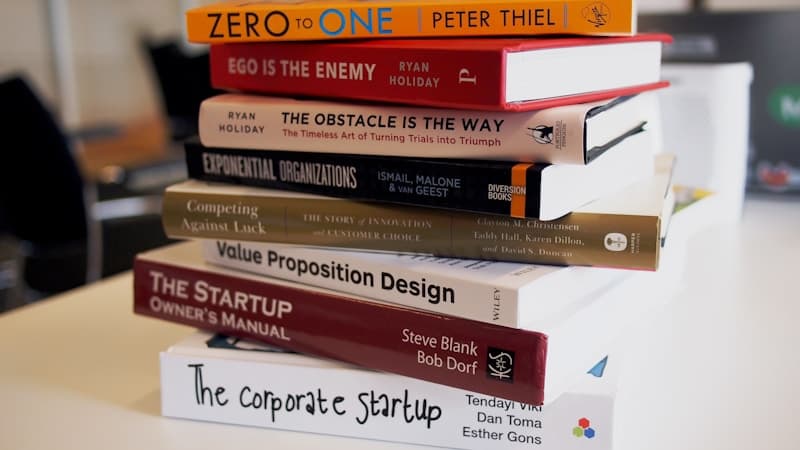
7 Books That Permanently Changed How I Think and Work
Not a reading list. These are the 7 books that rewired how I approach decisions, habits, focus, and learning. Each one left a permanent mark.

Mindset · 8 min
How to Create a Personal Development Plan That Sticks
A one-page personal development plan built on four principles: clarity, friction, feedback, cadence. With the exact template my friend used for 18 months.
Mindset · 7 min
How to Develop a Growth Mindset in Practice
Learn how to build a growth mindset that turns setbacks into stepping stones. Practical exercises to catch fixed thinking and take action today.

Mindset · 6 min
How to Turn Goals into Systems
Goals point the direction; systems do the work. How to translate any goal into one to three daily inputs you control, with a 15-second weekly scorecard.
Explore more topics: