How to Start One Focus Block Before 10 AM
By Tekin Kıvrak, cloud infrastructure engineer
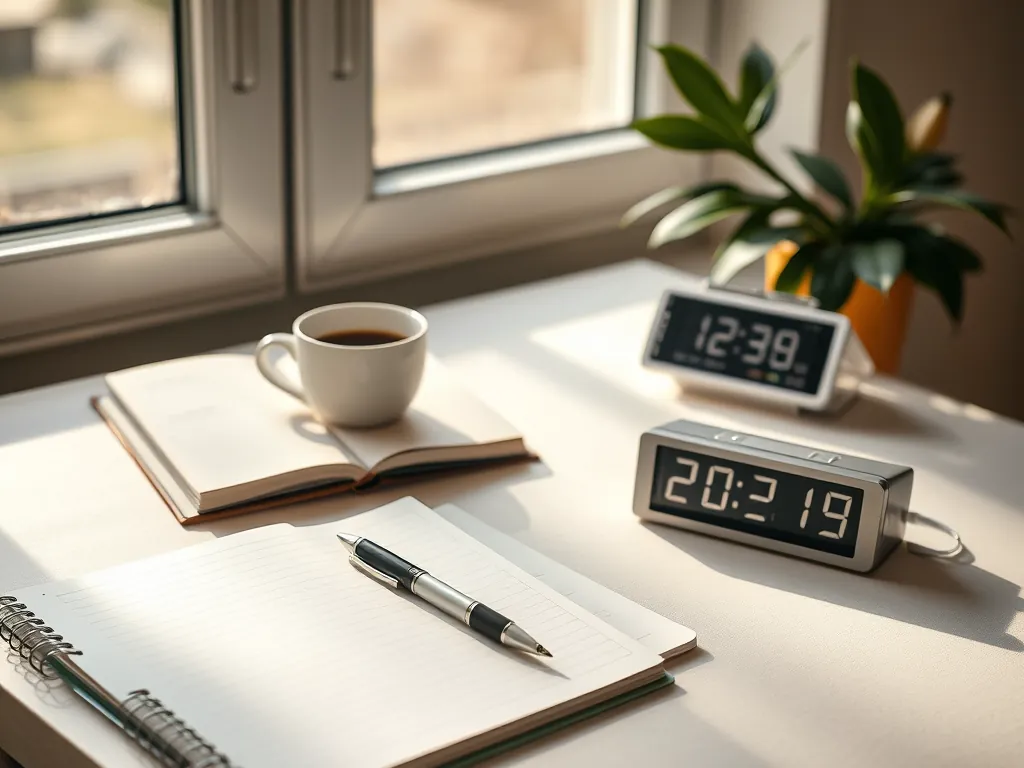
For most of my first year working remotely, my mornings evaporated. I'd sit down at 8:30 with good intentions, open Slack "just to check," and surface at 11:00 having produced nothing but replies. The work that mattered kept sliding to the afternoon, where it met my worst energy. What fixed it wasn't a new app. It was one protected block before 10 AM, booked like a meeting and defended like one. If your mornings slip into email, chats, and tiny tasks, you're not alone. The simplest way to take back the day is to start one focus block before 10. One protected window, done early, creates a visible win and stops the reactive spiral. This guide shows you how to set up that block, run it with confidence, and keep it going on the messiest weeks.

Why one early block changes the day
A focused morning session does three things. It locks in a tangible win before your inbox wakes up. It sets the tone for the day by moving something cognitively demanding while energy is fresher. And it reduces context switching later: once the hard thing has moved, admin feels lighter.
Researchers and practitioners often call this deep work: sustained attention on demanding tasks that produce disproportionate value. For a concise overview, Cal Newport's summary of Deep Work is a helpful primer. You don't need a perfect morning routine or a perfect week. You need one reliable block that starts on time and ends with a clear next action.
Setting it up (20 minutes)
Set a timer and move briskly through these steps.
First, choose one task and name it with a verb: draft section two, refactor login handler, outline slides, solve problem set 3. The verb matters because your brain needs to know what to do when the clock starts, not figure it out at 9:30am.
Then book the block. Open your calendar and place a 60-90 minute event between 8:30 and 10:00. If meetings crowd your mornings, use 9:30-10:30. Make the title actionable: "Draft section two (focus block)." Weekly planning helps you protect these windows without over-scheduling; see How to Organize Your Week for a simple cadence.
Stage your environment before you sleep. Phone in a drawer on Do Not Disturb. All tabs closed except the tool you'll use. Full-screen your editor. One physical cue: headphones, a mug, or a sticky note that says "Focus block (back at 10:30)."
Pick one timer track. 25/5 twice or three times if starting feels hard. 50/10 once or twice if you're already warm. 90/20 only on maker days. For more detail on each track, see Deep Work and Focus (Pomodoro).
Write the first move now, tonight. Open the file you'll touch and do one tiny action: paste an outline skeleton, write the first subheading, add a to-do list for the block. This erases the cold start.
Set a minimum and a maximum. Minimum: at least one 25-minute sprint, even on a chaotic day. Maximum: no more than two early blocks on a regular day. The minimum protects your streak; the maximum stops you from burning attention you'll need later.
Finally, prepare the finish ritual. At the end of the block, you'll write what moved (one sentence), the next step (one verb and where), and one friction you noticed. That's your daily review in under a minute. Tie a small treat to the end: a short walk, a new playlist, a coffee you only make after finishing.
Running the block
When you sit down, don't negotiate. Start the timer and move your hands. Five minutes in, you'll feel better because you're doing the thing you promised yourself.
During the session: stay in one window. Move ideas forward; don't polish. If you hit a snag, write a bracketed note [check data later] and continue. When you drift, say out loud: "Back to the verb," then return to the action you named.
At the break: stand up, drink water, look at something far away. Don't open the inbox. You're protecting state. If the task still has momentum, chain another sprint. If not, end on a clear next step and move to your day.
For a workplace perspective on building focus into your job design, this piece from Harvard Business Review is a solid complement.
Attention design: environment over willpower
The fastest gains come from structuring your space so focus is the easiest choice.
One-screen rule: keep only the active document visible; park chat and mail on a separate desktop. Notifications off during the block. A printed starter list next to your keyboard so you don't have to think about what's next. Phone away, face down, DND on.
Bright light early, a glass of water, and a neutral sitting posture extend stamina more than most people expect. These changes remove micro-taxes your brain pays to re-focus every time it gets distracted. Small, cheap, and they compound over weeks.
Tracking what matters
Don't judge by vibes. Track what you control this week alongside the results that only move monthly.
What you control, daily and weekly: blocks started (count), sprints completed (count), minutes from "sit down" to "first keystroke" (lower is better), and whether you kept the document open without switching.
What moves monthly: shipped artifacts (sections written, features merged, pages edited), cycle time per typical task, and subjective effort on a 1-5 scale.
For the scoreboard, one simple table works: rows are dates, columns are "Block started (yes/no)," "Sprints (#)," "Minutes to start," "Next action written (yes/no)," and "Note on friction." Scanning this in 10 seconds tells you the truth. Did the block happen?
Common pitfalls
Never starting on time? Your first step is unclear. Write the first verb on a sticky note the day before. Place it on the keyboard.
Starting then opening email? Cue collision. Full-screen your editor and move mail to Desktop 2. Block it during the block if needed.
Pomodoro feels choppy for your task? Use 50/10 or 90/20. Creative work often likes longer arcs. The important part is a clear start and a real break.
Meetings all morning? Win the edges. One 25-minute sprint before the first meeting and a second after lunch beats a perfect plan you never run.
Burning out after three days? Lower the maximum. Two early blocks before lunch is plenty on a regular day. Save longer stretches for maker days.
Tempted to tweak tools forever? Time-box setup to 10 minutes and ship one sprint today. Tools help when they remove friction; otherwise they're procrastination with a nicer font.
Example routines
Writer or editor: 9:00-9:50 draft section two (50/10); 10-minute break with water; 10:00-10:25 read aloud and fix structure (25/5); end by writing the next action and logging progress.
Developer: 9:30-10:20 refactor login handler (50/10); stand and stretch; 10:30-10:55 write tests for edge cases (25/5); end by pushing the branch and noting the next action.
Student: 8:30-9:20 problem set 3 (50/10); short walk; 9:30-9:55 create three flashcards from errors (25/5); end by writing the next action for office hours.
These flows respect the minimum and maximum. They're designed for real schedules, not ideal ones.
Keeping the system alive
Every Friday or Sunday, spend 10-15 minutes on a brief review. Did the block happen at least three times? If yes but it felt heavy, reduce the dose, move the time earlier, or switch timer tracks. If no, cut the task's scope and strengthen the start ritual. Fix one friction for the coming week, a folder reorganization, a notification turned off, a meeting boundary pushed back.
A few questions that come up often: How long should the block be? Start at 60 minutes or two 25-minute sprints. As stamina grows, try 90/20 once or twice a week. What if you can't control your mornings? Protect some edge: one sprint before the first meeting, or the block right after lunch. Do you need special apps? No. A calendar, a timer, and a text editor beat complex stacks. What if you miss a day? Tomorrow, do exactly one 25-minute sprint and stop. Never miss twice. How do you stop polishing? Decide scope up front: outline, draft, edit, ship. During the early block, you're moving the ball, not perfecting it.
Now block tomorrow's session. Open your calendar, claim a window between 8:30 and 10:00, and write the first verb in the file you'll touch. When the clock hits your start time, sit down, breathe once, and press start. You're five minutes from momentum.
Was this article helpful?
Related Posts

Productivity · 5 min
The 10-Minute Evening Shutdown Ritual That Saved My Mornings
Stop starting your day in reactive mode. A 10-minute evening ritual that closes open loops and makes every morning clearer, calmer, and more focused.

Productivity · 8 min
The Single-Tab Rule: What Closing 47 Tabs Did to My Focus
47 open tabs is not a productivity system. It's a panic attack with a bookmark bar. The one-rule reset that fixed my focus and what it actually changes.
Productivity · 7 min
How to Deep Work and Focus: Time-Blocking and Pomodoro
Master deep work with time-blocking and the Pomodoro technique. Learn how to eliminate distractions and produce your best work in focused sessions.

Productivity · 8 min
My Deep Work Toolkit: 7 Tools I Actually Use to Stay Focused
These are the 7 tools I rely on every day for deep work, from noise-canceling headphones to a plain notebook. No fluff, just what actually helps me focus.
Explore more topics: